Provide accurate cost estimates for budgetary proposals, firm fixed proposals, and change orders. Perform analysis of RFQ documents and provide proposal assistance. Assist project controls with the transfer of as-sold estimates to the project budget. Reconcile actual costs for retaining historical data.
Responsibilities
Prepare and review cost estimates in accordance with approved procedures to cover the following project phases:
concept selection and FEED, engineering, project management, procurement, fabrication, transport, installation, construction start-up, commissioning, and abandonment.
Prepare and evaluate cost estimates for alternative solutions to determine the most cost-effective option.
Coordinate with sales/engineering/project management as necessary to ensure incorporation of the full scope of work into the overall cost estimate.
Comparative analysis of estimates to historical and recent cost estimates.
Review of vendor quotes included in the estimate.
Lead the technical and management review process for estimates.
Provide rationale statements to support the cost estimate.
Identify and mitigate areas of weakness and or areas of risk.
Continuously monitor the performance of the estimating process as part of the key performance indicators for the contract.
Identify and make recommendations for improvement of the process.
Maintain benchmark database for future estimates by phase, while adding to the database with historical and current, revised data.
Job Specific
Technical and practical estimating skills and an ability to consistently deliver quality, accurate and timely work.
Knowledge of the fundamental requirements of the cost estimating discipline, including the ability to plan, review and present cost engineering and cost estimating products.
Ability to read and interpret PFDs and P&ID’s.
Knowledge of pressure vessels, heat exchangers and associated equipment for the oil and gas industry.
Knowledge of applicable local and international standards and statutory and regulatory requirements.
Knowledge of factored estimating is a plus.
Competent in the use of relevant software such as MS Office Suite and discipline-specific software and tools. Excellent proficiency in MS Excel.
Standard Competencies
Self-starting, proactive, goal-oriented with excellent attention to detail.
Excellent customer focus and able to consistently meet BCCK and its clients’ needs.
A person of integrity who is trusted by others and consistently honors their commitments.
Able to identify issues, problems, and opportunities; make timely decisions; develop appropriate and innovative solutions; and ask for timely assistance when required.
Excellent verbal and written communication skills, including the ability to convey information and ideas to individuals and groups, and make presentations when required.
Demonstrates initiative and a willingness to learn and continuously improve performance.
Able to work on multiple projects of various sizes and complexities, often at the same time.
Able to work effectively in small to large multi-disciplinary teams and share and transfer knowledge within teams.
Job Work Environment:
This job operates in a professional office environment. This role routinely uses standard office equipment such as computers, phones, photocopiers, filing cabinets and fax machines.
Physical Demands:
The physical demands described here are representative of those that must be met by an employee to successfully perform the essential functions of this job. While performing the duties of this job, the employee is required to stand, walk, and sit; use hands to finger, handle or feel objects, tools or controls; reach with hands and arms; climb stairs; balance; stoop, kneel, crouch or crawl; talk or hear; taste or smell. The employee must occasionally lift and/or move objects up to 25 pounds. Specific vision abilities required by the job include close vision, distance vision, color vision, peripheral vision, depth perception, and the ability to adjust focus.
Position Type/Expected Hours of Work:
This position is a full-time, exempt, 40-hour per week employment. Overtime hours are sometimes required, depending on the phase of the project and project schedule, and may include weekends and evening work.
Travel:
Occasional.
Required Education and Experience:
Ability to work in complex environments. Previous estimating experience in the oil and gas industry (experience in cryogenic gas processing a plus) of 3-10 years preferred.
AAP/EEO Statement:
BCCK Holding Company provides equal employment opportunities to all employees and applicants for employment and prohibits discrimination and harassment of any type without regard to race, color, religion, age, sex, national origin, disability status, genetics, protected veteran status, sexual orientation, gender identity or expression, or any other characteristic protected by federal, state, or local laws. This policy applies to all terms and conditions of employment, including recruiting, hiring, placement, promotion, termination, layoff, recall, transfer, leaves of absence, compensation, and training.
Other Duties:
Please note this job description is not designed to cover or contain a comprehensive listing of activities, duties or responsibilities that are required of the employee for this job. Duties, responsibilities, and activities may change at any time with or without notice.
From cutting emissions to boosting revenue, cryogenic nitrogen rejection units are the ultimate solution for optimizing landfill gas projects.
By Naomi Baker, P.E.
Landfill gas (LFG) is primarily methane (CH₄) and carbon dioxide (CO₂), with traces of other compounds. While methane is an environmentally hazardous greenhouse gas, it can be processed into renewable natural gas (RNG) for energy, fuel or pipeline use, turning an environmental challenge into a profitable asset.
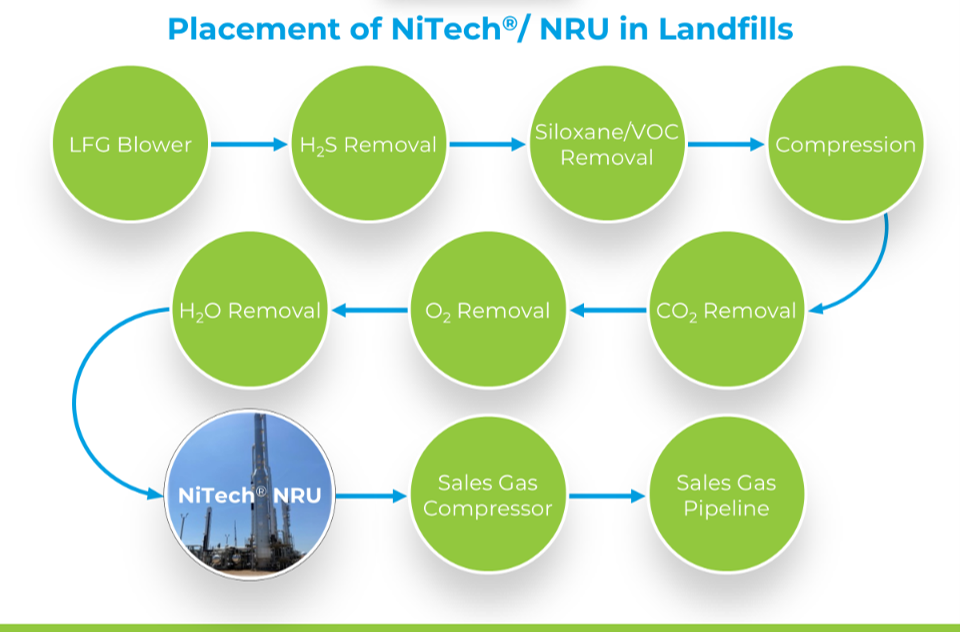
Landfill gas processing is advancing rapidly as operators search for efficient technologies to convert waste into renewable energy. Among the most effective solutions are cryogenic nitrogen rejection units (cryo-NRUs). These systems excel in maximizing methane recovery, reducing operational costs, scaling to meet growing project demands, and maintaining environmental compliance. For companies seeking to address environmental concerns while optimizing profitability, cryo-NRUs offer an exceptional path forward (Figure 1).
Figure 1. Flowchart demonstrating the role of BCCK’s NiTech®cryo-NRU within the LFG sales pipeline.
Reducing methane loss for greater profitability
Recovering high levels of methane is critical for landfill gas projects. Methane purity directly impacts its utility, from energy generation to pipeline injection. Cryo-NRUs are particularly effective at recovering methane even when feed gas has high nitrogen levels. Cryogenic technology includes a specialized process known as fractional distillation, where gases are cooled to extremely low temperatures to separate methane from nitrogen. The resulting methane stream is purer and meets energy and pipeline-grade standards.
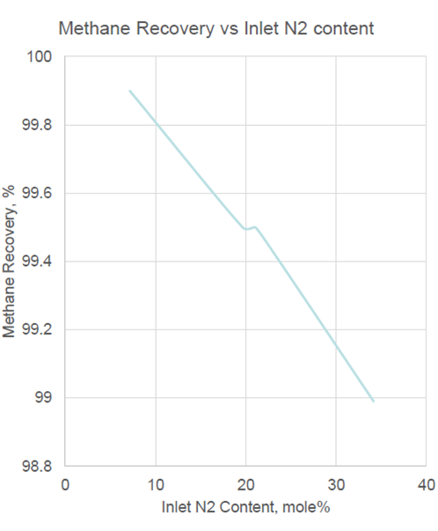
For example, one facility processing 6,000 standard cubic feet per minute (SCFM) of landfill optimized its methane recovery by upgrading to a BCCK cryo-NRU system. Previously, a significant portion of methane was lost, reducing potential profits (Figure 2). The new system captured the methane effectively, converting it into a usable energy resource. This yielded higher revenues and decreased the environmental footprint.
Figure 2. Comparison of methane recovery versus inlet N₂ content.
Investing smarter and ensuring long-term savings
While cryogenic NRUs may require a larger upfront investment compared to some alternatives, their operational efficiency and cost savings over time more than justify the expense. Cryo-NRUs consume less energy and require less frequent maintenance, making them ideal for projects with long operational lifespans.
For a medium-sized project, energy savings alone can range from US$1 to US$1.5 million annually. Over a 20-year lifecycle typical of landfill operations, cumulative savings can reach up to US$20 million. These efficiencies are rooted in cryogenic systems’ energy-conscious designs, particularly in compression processes, which represent a major cost in most methane recovery systems.
Although some installations include pre-treatment investments, such as oxygen, carbon dioxide, and water removal, operators typically offset these costs with long-term benefits. These operational improvements make investing in cryo-NRUs a financially sound decision.
Scaling operations to meet demands
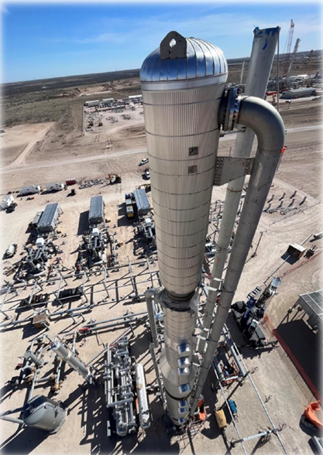
Adaptability is a significant advantage for cryo-NRUs. These systems perform effectively for projects of all sizes—from small-scale landfills managing lower gas volumes to large-scale sites processing up to 16,000 SCFM. For example, BCCK’s cryo-NRUs are effective at as low as 3,200 SCFM. Additionally, many cryo-NRUs do not have heaters, blowers, pumps or an internal compressor. They operate with one skid and a vessel. Some competing technologies require multiple trains of rotating equipment, calling for multiple skids and have more complex process designs. Thanks to their modular and scalable designs, cryo-NRUs can seamlessly adjust as landfill gas volumes grow or shift, all while maintaining high-efficiency performance.
Alternative technologies often struggle to manage increased flow rates without dramatic declines in performance, but cryo-NRUs avoid these pitfalls. Their flexible structures position operators to expand operations, ensuring systems are future-proofed for growth opportunities.
Adhering to pipeline specs with cleaner outputs
One of the most immediate challenges landfill gas operators face is meeting strict pipeline-quality requirements. To be accepted into natural gas pipelines, RNG must meet certain standards for nitrogen and oxygen content. Cryo-NRUs shine in this area by producing exceptionally clean product streams, reducing nitrogen levels to below 0.5%, which exceeds most pipeline standards.
By avoiding the need for further downstream treatment, operators save time and resources while maintaining compliance. Additionally, streamlined designs in systems like BCCK’s cryo-NRUs minimize reliance on complex rotating machinery, improving reliability and cutting down on maintenance costs.
Managing nitrogen
The composition of landfill gas is rarely consistent. Factors like local climate, the type of waste decomposing in the landfill, and seasonal shifts can all influence gas composition. Cryo-NRUs are engineered to handle gas variations, including nitrogen levels as high as 90%. This makes them highly reliable for operators who may otherwise face plant downtime or reduced outputs during fluctuating conditions.
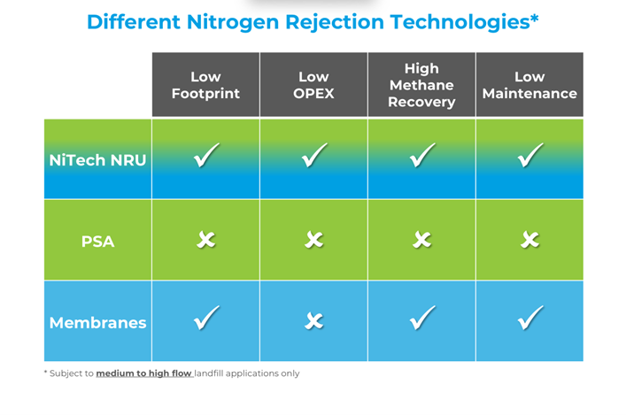
This improves methane recovery rates while streamlining operations and reducing overall system costs (Figure 3).
Figure 3. Comparison of BCCK’s cryo-NRUs with alternative technologies.
Maintaining environmental compliance
With rising environmental regulations, landfill operators must reduce greenhouse gas emissions while remaining profitable. Traditional methods often vent methane, creating environmental and compliance issues. Cryo-NRUs avoid such problems by emphasizing near-complete methane capture.
For example, BCCK’s cryo-NRUs fully comply with stringent U.S. EPA standards for methane control. Again, these units also provide significant economic benefits, including reduced electricity costs and higher volumes of saleable gas due to their methane recovery. These systems help operators mitigate environmental damage by integrating sustainability with economic performance.
Real-world cryo-NRU case studies
Solving Methane Recovery Challenges
A landfill facility in Klickitat County, Washington, struggled with poor methane recovery rates, limiting the production of high-quality RNG and reducing profitability. Methane losses posed risks with environmental regulations and constrained the facility’s ability to generate energy and revenue effectively. By developing BCCK’s NiTech® cryo-NRU system, which uses fractional distillation to efficiently reject nitrogen and recover methane, the facility saw a significant operational boost. The plant processed 5,000 SCFM of feed gas at higher recovery rates, reduced emissions, and achieved pipeline compliance with ease. The cost savings and environmental benefits enabled the facility to increase its profitability and boost its sustainability.
Increasing System Efficiency
Another facility processing landfill gas at 6,000 SCFM encountered inconsistent nitrogen levels that reduced system efficiency. This resulted in rising energy bills, missed revenue from wasted methane, and an ongoing struggle to meet pipeline standards. With the BCCK NiTech® cryo-NRU, the facility stabilized its operations, recovering higher rates of methane regardless of nitrogen fluctuations. The upgrade led to operational savings of over US$6 million annually. These improvements not only optimized their outputs but also significantly reduced their energy usage and maintenance costs, ensuring long-term success.
Practical benefits for landfill gas operations
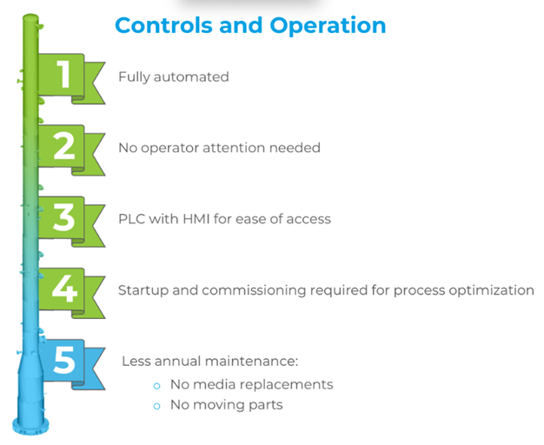
Cryogenic NRUs are designed with durability and practicality in mind. Their accessible layout allows for routine inspections with occasional adjustment. The absence of media replacements and moving parts lowers upkeep demands (Figure 4). This reduction in maintenance minimizes downtime and allows operators to focus their resources on other operational needs. With these advantages, cryo-NRUs present a dependable and efficient option for optimizing landfill gas projects.
Figure 4. Main benefits of BCCK’s cryo-NRUs.
Naomi Baker is BCCK’s Vice President of Engineering and holds a BS in Chemical Engineering from Texas Tech University. She is a registered engineer in the state of Texas.
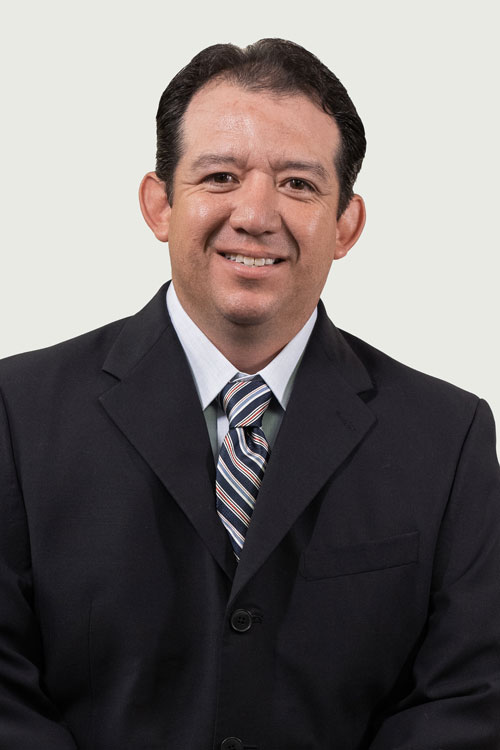
BCCK, a leader in engineering, procurement, fabrication, and field construction services, has promoted Angel Valles, P.E., to vice president of engineering.
In this role, Valles will lead the company’s engineers and designers while continuing to support BCCK’s commitment to delivering high-quality engineering solutions for clients across the energy sector. Prior to his promotion, Valles served as director of mechanical engineering, overseeing all mechanical engineering and piping design efforts for the company.
Based in Midland, Texas, Valles brings more than 23 years of industry experience leading multidisciplinary engineering teams. His expertise includes enhanced oil recovery (EOR) methods, cryogenic natural gas processes, production facilities and gathering system design.
Valles earned a Bachelor of Science in mechanical engineering from Texas A&M University. He is a licensed professional engineer in Texas and New Mexico and is a member of GPA.
Kevin Blount, president, BCCK, said, “Angel’s experience across engineering design, production facilities and cryogenic natural gas processes positions him well to lead our engineering operations as we continue supporting clients across the energy sector.”
BCCK, a leader in engineering, procurement, fabrication and field construction services, has appointed Erin Wiersma as manager of business development.
Wiersma will be responsible for driving business development and revenue growth by promoting BCCK’s engineering, fabrication, and construction services across energy markets.
Based in Midland, Texas, Wiersma brings more than a decade of industry experience to BCCK. She began her career in 2013 as an operator in the Uintah Basin in Utah and has since developed strong experience in the sale of processing equipment, valves, and maintenance services. Throughout her career, she has supported customer growth and operations across Colorado, Utah, Wyoming, North Dakota, and Texas.
She is actively involved in industry organizations and serves as programs director for Women’s Energy Network (WEN) Permian Basin and is a member of the Gas Processors Association Midstream Permian Basin Chapter (GPA Midstream Permian Basin Chapter).
Kevin Blount, president, BCCK, said, “I am delighted to welcome Erin to BCCK. She has a natural ability to build trust with customers, taking the time to listen, understand the broader picture, and develop solutions that align with client needs. That approach closely reflects BCCK’s commitment to delivering thoughtful, client-focused solutions.”
BCCK, a leader in engineering, procurement, fabrication and field construction services, has named Mark Shaffer as director of business development – gas processing.
In this role, Shaffer will oversee and execute strategic growth initiatives by identifying, evaluating and securing new commercial opportunities and partnerships across BCCK’s gas processing portfolio. He will lead market analysis and oversee proposal and contract development to expand the company’s presence in key markets.
Shaffer is based in Houston and brings business development experience within the oil and gas and energy sectors, most recently supporting pipeline and facilities engineering projects. Prior to transitioning into business development, he held field-focused and traditional engineering roles, which provided him with a strong technical foundation and practical industry experience.
He holds a Bachelor of Science in petroleum and natural gas engineering from the New Mexico Institute of Mining and Technology. Shaffer is an active member of several industry organizations, including GPA, PAH, YPP, PYP and SPE.
Kevin Blount, president, BCCK, said, “Mark’s combination of technical expertise and commercial experience makes him a strong addition to our team. His understanding of industry operations, paired with his ability to build strategic relationships, will help support BCCK’s continued growth in the gas processing market.”
We use cookies on our website to give you the most relevant experience by remembering your preferences and repeat visits. By clicking “Accept”, you consent to the use of ALL the cookies.
This website uses cookies to improve your experience while you navigate through the website. Out of these, the cookies that are categorized as necessary are stored on your browser as they are essential for the working of basic functionalities of the website. We also use third-party cookies that help us analyze and understand how you use this website. These cookies will be stored in your browser only with your consent. You also have the option to opt-out of these cookies. But opting out of some of these cookies may affect your browsing experience.
Necessary cookies are absolutely essential for the website to function properly. These cookies ensure basic functionalities and security features of the website, anonymously.
Cookie
Duration
Description
cookielawinfo-checkbox-analytics
11 months
This cookie is set by GDPR Cookie Consent plugin. The cookie is used to store the user consent for the cookies in the category "Analytics".
cookielawinfo-checkbox-functional
11 months
The cookie is set by GDPR cookie consent to record the user consent for the cookies in the category "Functional".
cookielawinfo-checkbox-necessary
11 months
This cookie is set by GDPR Cookie Consent plugin. The cookies is used to store the user consent for the cookies in the category "Necessary".
cookielawinfo-checkbox-others
11 months
This cookie is set by GDPR Cookie Consent plugin. The cookie is used to store the user consent for the cookies in the category "Other.
cookielawinfo-checkbox-performance
11 months
This cookie is set by GDPR Cookie Consent plugin. The cookie is used to store the user consent for the cookies in the category "Performance".
viewed_cookie_policy
11 months
The cookie is set by the GDPR Cookie Consent plugin and is used to store whether or not user has consented to the use of cookies. It does not store any personal data.
Functional cookies help to perform certain functionalities like sharing the content of the website on social media platforms, collect feedbacks, and other third-party features.
Performance cookies are used to understand and analyze the key performance indexes of the website which helps in delivering a better user experience for the visitors.
Analytical cookies are used to understand how visitors interact with the website. These cookies help provide information on metrics the number of visitors, bounce rate, traffic source, etc.
Advertisement cookies are used to provide visitors with relevant ads and marketing campaigns. These cookies track visitors across websites and collect information to provide customized ads.