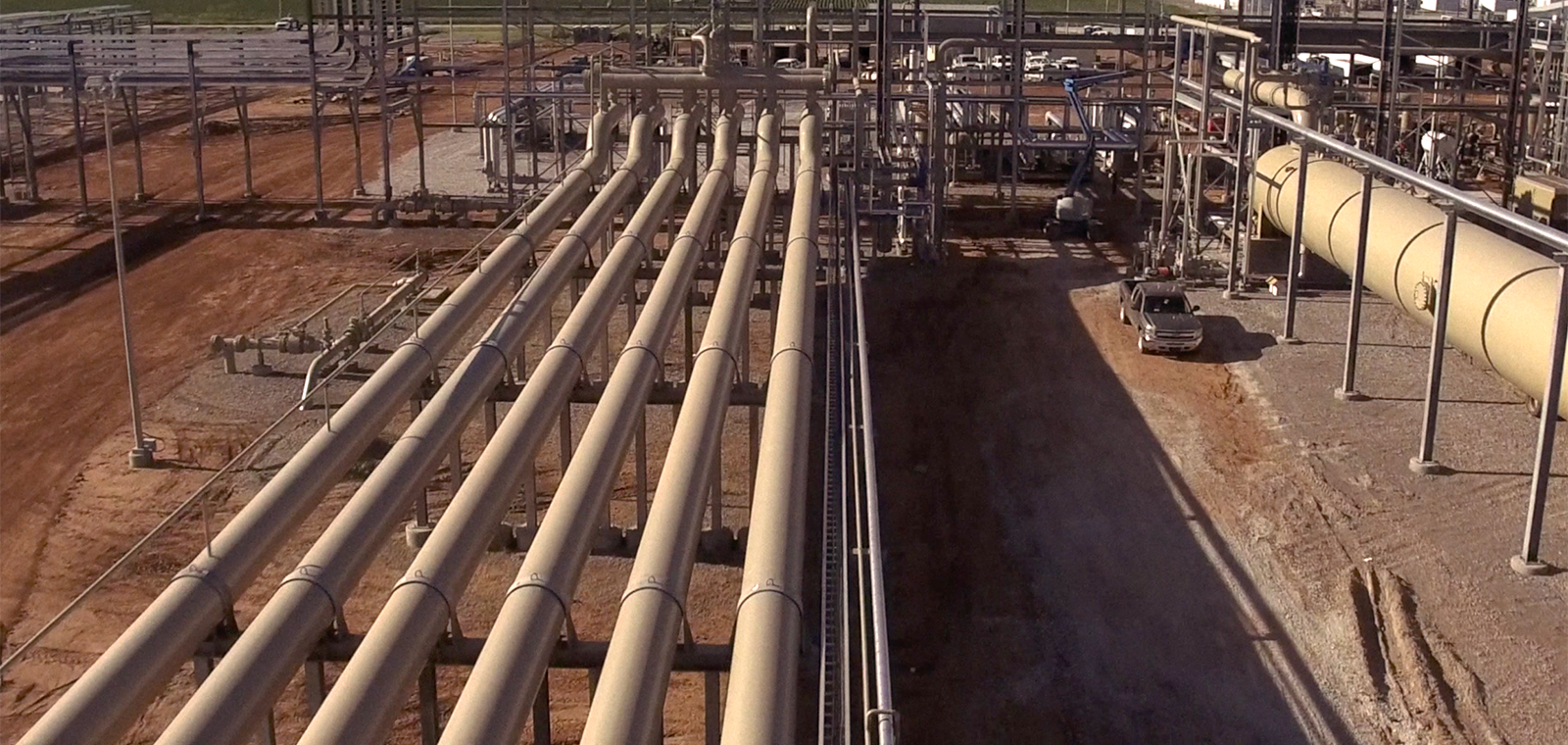
Natural gas processing has undergone significant transformations over the past several decades, with nitrogen rejection emerging as a critical component in maximizing hydrocarbon recovery. High nitrogen content in natural gas streams has historically posed substantial challenges for operators, making previously viable reserves uneconomical and limiting production potential. Understanding nitrogen rejection’s history and technological advancement provides valuable insights into how the industry has evolved to address these complex separation challenges.
Developing efficient nitrogen rejection processes represents a pivotal breakthrough in natural gas processing technology. From early recognition of the problem to implementing sophisticated cryogenic solutions, the journey of nitrogen rejection technology demonstrates how innovation drives operational excellence and economic viability in the energy sector.
Early Challenges and the Critical Need for Nitrogen Rejection
During the 1980s, natural gas operators faced mounting pressure from reserves containing elevated nitrogen concentrations. Traditional processing methods proved inadequate for these challenging compositions, often rendering otherwise profitable projects economically unfeasible. High nitrogen content created multiple operational difficulties, including reduced heating value, pipeline specification violations and increased transportation costs.
The separation of nitrogen from methane presented unique technical challenges compared to conventional natural gas processing. Unlike typical cryogenic distillation processes, nitrogen rejection requires simultaneously managing minor volatility differences, close boiling points and deep cryogenic temperatures. Combined with full heat integration requirements and complex two-phase flow conditions throughout the process, these factors created what industry experts described as a technical minefield.
Many operators discovered that their reserves contained nitrogen concentrations ranging from moderate to 90 percent, effectively stranding valuable hydrocarbon resources. The industry desperately needed a reliable, cost-effective solution to handle varying inlet conditions while maintaining high methane recovery rates.
The Innovation of BCCK and the NiTech® Process
Recognizing the critical gap in available technology, Clark Butts, founder of BCCK, developed and patented the revolutionary NiTech® nitrogen rejection process in the late 1980s. This breakthrough addressed the challenges natural gas streams face with volumes less than 30 MMSCFD, a market segment underserved mainly by existing technologies.
The NiTech® process represented a fundamental shift in the approach to nitrogen rejection. Rather than relying on complex, high-maintenance systems, Butts engineered a solution that prioritized simplicity, efficiency and reliability. The patented technology incorporated innovative heat integration strategies and optimized distillation techniques specifically designed for the unique characteristics of nitrogen-methane separation.
BCCK’s first NiTech® nitrogen rejection unit installation occurred in 1994 in Mist, Oregon, marking the beginning of the industry’s most successful nitrogen rejection technology. This pioneering installation demonstrated the process’s viability and established BCCK as the leading provider of nitrogen rejection solutions.
>>Read More: THE NITROGEN REJECTION PROCESS: HOW IT WORKS AND WHY
Applications and Capacity Range of NiTech® NRU Technology
The versatility of NiTech® nitrogen rejection unit technology extends across an impressive range of applications and capacities. Current installations serve natural gas streams ranging from 5 MMSCFD to 220 MMSCFD, but have been designed to over 500 MMSCFD, demonstrating the scalability and adaptability of the process design. This broad capacity range enables operators to recover previously uneconomical reserves due to nitrogen, CO₂, helium, oxygen or other contaminants.
The technology has succeeded in diverse applications, including conventional natural gas processing facilities, landfill gas operations and coal mine methane projects. Each application presents unique challenges, yet the flexible design of the NiTech® process accommodates varying inlet conditions while maintaining consistent performance standards.
Operators utilizing NiTech® technology can reduce nitrogen contents from 3 percent to 90 percent, down to as low as 1 percent, achieving hydrocarbon recovery rates typically exceeding 99 percent. This exceptional efficiency ensures maximum value extraction from challenging gas streams while meeting strict pipeline specifications.
Environmental Benefits and Methane Emission Reduction
Environmental stewardship has become increasingly crucial in natural gas processing operations, and the NiTech® nitrogen rejection process was explicitly designed with emission reduction as a core priority. The process architecture minimizes methane emissions through optimized recovery systems and advanced process control strategies.
Unlike many alternative technologies, the NiTech® process emits no non-methane volatile organic compounds (VOCs), contributing to cleaner operations and improved environmental compliance. The system’s design philosophy emphasizes methane conservation, ensuring that valuable hydrocarbons are recovered rather than lost to atmospheric emissions.
The environmental benefits extend beyond direct emission reductions. By enabling the economic recovery of previously stranded reserves, nitrogen rejection technology reduces the need for new exploration and development activities, minimizing the overall environmental footprint of natural gas production.
Success Stories and Industry Recognition
BCCK’s track record in nitrogen rejection speaks to the reliability and effectiveness of the NiTech® technology. With 46 successful NRU installations completed to date, BCCK has established itself as the most active NRU provider for over 20 years. This extensive operational experience provides invaluable insights that drive technology improvements and optimization strategies.
The success of these installations stems from BCCK’s unique approach to process engineering, which emphasizes real-world operational experience over theoretical modeling. Each installation provides critical data and lessons learned that inform future designs, creating a continuous improvement cycle that benefits all customers.
Industry recognition of NiTech® technology extends beyond installation numbers. These systems’ proven performance has established new benchmarks for nitrogen rejection efficiency, reliability and cost-effectiveness, influencing industry standards and best practices.
Advantages of NiTech® NRU Technology
The NiTech® nitrogen rejection unit offers multiple advantages that distinguish it from alternative technologies. The efficient design requires significantly reduced horsepower compared to non-cryogenic options, resulting in lower operating costs and improved energy efficiency. The system’s high methane recovery rates ensure maximum value extraction from challenging gas streams.
Key operational advantages include simple, non-complex process design requiring minimal operator attention, small footprint due to minimal equipment requirements and quick restart capabilities. Cold restart from short shutdowns allows operators to bring the system online and on-spec by simply restarting associated compression equipment.
The technology also enables integrated processing capabilities, including NGL extraction with efficiencies up to 93 percent ethane recovery and integrated helium extraction with high recovery rates. This versatility allows operators to maximize revenue from multiple product streams while maintaining operational simplicity.
Advanced Technologies: NiTech® ULM and Tower Configurations
Recent technological advancements have led to the development of NiTech® ULM (Ultra Low Methane Enhancement), a patent-pending enhancement designed to achieve ultra-low methane vent levels. This innovative solution sets new standards in emissions control by reducing methane content to as low as 10 ppmv, resulting in minimal methane losses to the environment.
The NiTech® ULM utilizes BCCK’s proven NiTech® NRU technology with a small compressed reflux system, requiring only minimal additional equipment. This enhancement can be implemented in new facilities or retrofitted to existing NiTech® units, providing operational flexibility for expanding environmental compliance requirements.
BCCK offers two primary tower configurations to optimize performance for specific application requirements. The NiTech® Single Tower features a robust design enabling the processing of higher inlet N₂ streams and proves ideal for landfill applications. The section, targeted for lower N₂ inlet gas streams. This configuration yields 10-15 percent lower required horsepower than the most efficient single tower processes while providing higher CO₂ tolerance.
The Future of Nitrogen Rejection Technology
The evolution of nitrogen rejection technology continues, driven by increasing environmental regulations, expanding global LNG markets, and the ongoing need to maximize hydrocarbon recovery from challenging reserves. BCCK’s commitment to continuous improvement ensures that nitrogen rejection process technology will evolve to meet emerging industry requirements.
Current research focuses on further emission reductions, enhanced energy efficiency and expanded application ranges. Integrating advanced process control systems and predictive maintenance technologies promises greater operational reliability and performance optimization.
As the natural gas industry faces increasing pressure to reduce environmental impact while maintaining economic viability, nitrogen rejection technology is increasingly critical in achieving these objectives. NiTech® technology’s proven success provides a solid foundation for continued innovation and industry leadership.
BCCK’s extensive experience in nitrogen rejection unit design and operation, combined with ongoing technology development, positions the company to continue leading the industry in providing reliable, efficient solutions for the most challenging natural gas processing applications. The company’s commitment to operational excellence and customer success ensures that future developments will continue delivering measurable value to operators worldwide.
Natural gas processing has seen major transformations over the decades, with the nitrogen rejection process emerging as a critical component for maximizing hydrocarbon recovery. High nitrogen content in natural gas streams can make previously viable reserves uneconomical and limit production potential. Understanding the history and technological advancement of nitrogen rejection provides valuable insight into how the industry has evolved to address these complex separation challenges.
Developing efficient nitrogen rejection units (NRUs) represents a pivotal breakthrough. This guide explores the evolution of this technology, from the initial challenges to the sophisticated cryogenic solutions that define the industry today. We will examine how innovation has driven operational excellence and economic viability in the energy sector.
A History of Nitrogen Rejection
Early Industry Challenges
During the 1980s, natural gas operators faced mounting pressure from reserves with high nitrogen concentrations. Traditional processing methods were inadequate for these compositions, often making profitable projects economically unfeasible. High nitrogen levels created multiple operational issues, including reduced heating value and violations of pipeline specifications.
The separation of nitrogen from methane presented unique technical difficulties. Unlike typical cryogenic distillation, the nitrogen rejection process required managing small volatility differences, close boiling points and deep cryogenic temperatures simultaneously. Combined with complex heat integration and two-phase flow conditions, this created what industry experts called a technical minefield. Many operators discovered their reserves contained nitrogen concentrations up to 90%, stranding valuable hydrocarbon resources. A reliable, cost-effective solution was desperately needed.
The Innovation of BCCK and the NiTech® Process
Recognizing this gap, Clark Butts, the founder of BCCK, developed and patented the revolutionary NiTech® nitrogen rejection process. This breakthrough addressed the specific challenges of natural gas streams with volumes under 30 MMSCFD, a segment largely ignored by existing technologies.
The NiTech® process represented a fundamental shift. Instead of complex, high-maintenance systems, Butts engineered a solution focused on simplicity, efficiency and reliability. BCCK’s first NiTech® nitrogen rejection unit installation occurred in 1994, marking the beginning of what would become the most successful nitrogen rejection technology in the industry.
BCCK’s NiTech® NRU Technology
With 46 successful NRU installations, BCCK has established itself as a leader in nitrogen rejection. The NiTech® technology serves natural gas streams from 5 MMSCFD to over 500 MMSCFD, demonstrating its scalability. This allows operators to recover reserves previously considered uneconomical due to high concentrations of nitrogen, CO₂, helium or oxygen.
The NiTech® NRU offers an efficient design with reduced horsepower requirements and high methane recovery, resulting in a lower-cost, more reliable system. Whether using a single or dual-tower configuration, NiTech® has become the go-to solution for nitrogen rejection across a wide range of N₂ inlet gas streams.
Advantages of the NiTech® NRU Process
The NiTech® nitrogen rejection unit provides several advantages over alternative technologies. Its efficient design requires significantly less horsepower than non-cryogenic options, leading to lower operating costs. The system’s high methane recovery rates, typically exceeding 99%, ensure maximum value is extracted from challenging gas streams.
Key operational benefits include:
- A simple, non-complex process design requiring minimum operator attention.
- A small footprint due to minimal equipment requirements.
- Quick restart capabilities allow the system to be returned online and on-spec quickly after short shutdowns.
- Integrated processing for NGL and helium extraction, maximizing revenue from multiple product streams.
Advanced NiTech® Technologies
BCCK continues to innovate with advanced enhancements and configurations to meet evolving industry needs.
NiTech® ULM (Ultra-Low Methane) Enhancement
The patent-pending NiTech® ULM enhancement was designed to achieve ultra-low methane vent levels. This solution sets a new standard in emissions control, reducing methane content in the vent stream below 1500 ppm. The ULM enhancement utilizes BCCK’s proven NRU technology with a small, compressed reflux system, requiring minimal additional equipment. It can be implemented in new facilities or retrofitted to existing NiTech® units.
NiTech® Single Tower
The NiTech® Single Tower features a robust design capable of processing higher-inlet N₂ streams. Its durability and efficiency make it an ideal solution for demanding applications, such as landfill gas operations, where gas compositions can be particularly challenging.
NiTech® Dual Tower
The NiTech® Dual Tower configuration uses BCCK’s single tower design and adds an LP processing section. This design targets lower N₂ inlet gas streams and has become the industry standard for nitrogen removal after an NGL facility. It yields 10-15% lower horsepower requirements than the most efficient single tower processes while offering higher CO₂ tolerance.
>> Read “Understanding NiTech® NRU Styles and Applications” for More Information
The Future of Nitrogen Rejection
The nitrogen rejection process’s evolution is far from over. Driven by increasing environmental regulations, expanding global LNG markets, and the need to maximize hydrocarbon recovery, the technology continues to advance. BCCK’s commitment to continuous improvement ensures that its nitrogen rejection units will meet emerging industry requirements.
>>Read “Nitrogen, The Achilles Heel of LNG Efficiency: How NRUs Solve Critical Industry Challenges” for More Information.
Current research focuses on further emission reductions, enhanced energy efficiency, and expanded application ranges. As the natural gas industry faces pressure to reduce its environmental impact while maintaining economic viability, technologies like the NiTech® nitrogen rejection process play a critical role. The proven success of BCCK’s solutions provides a solid foundation for continued innovation and industry leadership.
Beyond NRU Gas Removal Q&A
Q1: What does BCCK deliver in gas removal beyond NRU technology?
BCCK provides end-to-end solutions for CO2, O2, and H2S removal, transforming off-spec produced gas into pipeline quality gas. Our offering includes oxygen removal oxygen removal, membrane and fractionation-based CO2 extraction, and proven sulfur removal systems—all delivered through integrated engineering, fabrication, installation, and startup. Producers benefit from compliant gas, enhanced revenue streams, and reduced environmental footprint.
Q2: What proprietary technologies set BCCK apart in gas removal?
Oxygen removal is our field-proven technology for oxygen removal, engineered to stabilize and upgrade oxygen-contaminated streams such as coal mine methane, landfill gas, and low-pressure gathering. By converting vented gas into pipeline-quality or on-site fuel, oxygen removal enables operators to turn waste into revenue and curb emissions.
Q3: What types of projects and gas streams does BCCK serve?
We serve coal mine degasification, landfill gas (LFG), renewable natural gas (RNG), and high-CO2 and H2S fields. Our experience spans the U.S., with operational projects in Pennsylvania, Alabama, and Illinois. BCCK’s solutions are tailored for unique upstream and midstream conditions, delivering flexibility in feed composition and flow.
Q4: What technologies and process options are available for CO2, O2, and H2S removal?
- CO2 Removal: Membranes for bulk removal, fractionation for deep cut and NGL uplift, and fractionation with integrated absorption or refrigerated MeOH for ultra-low CO2 applications (e.g., cryogenic or LNG feeds).
- H2S Removal: Amine treating for high concentration, scavenger systems for polishing or low-volume needs, and integrated dehydration or filtration for media protection.
Each solution is selected to balance efficiency, operability, and total lifecycle cost.
Q5: How does BCCK ensure compliance, gas quality, and operational efficiency?
Every solution starts with detailed feed characterization and simulation. We embed controls and safeguarding into P&IDs, run PHA/HAZOP studies, and conduct rigorous startup testing. Modular fabrication minimizes site risk and schedule, and automation ensures gas quality (dew point, Wobbe index, contaminant specs) is consistently achieved, meeting pipeline and LNG requirements.
Q6: Which industry standards and certifications does BCCK meet?
Our solutions and fabrication comply with major codes and standards: API, ASME, NEC, and applicable environmental regulations. Quality control is documented from material traceability (MTRs) and welder qualifications to full inspection and turnover packages, ensuring complete compliance throughout the project lifecycle.
Q7: What project management and execution support is provided?
BCCK provides a single point of accountability from FEED through commissioning. Our teams deliver clear documentation (ITPs, test plans, data books), critical path management, and regular progress reporting. Pre-commissioned modules are shipped with preservation and logistics coordinated for domestic and international delivery.
Q8: How do your solutions contribute to cost reduction and schedule certainty?
Modular design and fabrication reduce field labor, expedite tie-ins, and compress time-to-revenue. Early vendor and materials lock, robust QA/QC, and tested packages limit rework, ensure schedule adherence, and drive down total installed cost.
Q9: What outcomes can operators expect from CO2, O2, and H2S removal projects?
- Reliable, specification-grade gas with increased runtime
- Improved NGL recovery and profit margins
- Lower emissions and seamless regulatory compliance
- Fast-tracked start-up and project completion
Q10: What information is needed to initiate a project with BCCK?
Provide feed composition data, flow/pressure/temperature range, product specs, utility/source details, codes/standards, and schedule expectations. We deliver a defined scope, technology selection, compliance strategy, schedule, and turnkey execution plan.
Q11: How do we get started?
Share your project requirements with us. BCCK will propose a tailored concept or FEED package with clear deliverables, performance guarantees, cost estimate, schedule, and a modularization strategy—ready for execution and optimized for performance beyond NRU.
BCCK designs and delivers cryogenic gas and turbo expander plants that maximize recoveries, improve efficiency, and adapt to changing gas compositions—all with turnkey execution from concept to startup.
Q1: What makes BCCK’s cryogenic plants different?
We tailor each plant to your gas composition and business goals. Our designs prioritize high recovery rates, energy efficiency, and operational flexibility, so you get a facility that performs in real conditions—not just on paper.
Q2: How do you optimize project economics?
We right-size equipment, integrate energy-saving heat exchange, and design for modular construction to shorten schedules. We also build in operating modes that let you respond to market swings, protecting margins over the life of the asset.
Q3: Can you support both ethane recovery and rejection?
Yes. We engineer plants that switch between deep ethane recovery and ethane rejection, based on price spreads. This lets you capture value when ethane is strong and minimize recovery when it isn’t—while still maximizing propane and heavier NGLs.
Q4: What recovery rates can operators expect?
Our solutions are designed for high performance, including up to very high propane and heavier hydrocarbon recoveries and strong ethane recovery when desired. Actual rates depend on feed and operating mode, and we define them clearly during FEED.
Q5: How do you handle variable inlet gas compositions?
We use robust process modeling and flexible control strategies to maintain stable operation across changing flows and compositions. Designs can include pretreatment, dehydration, and inlet chilling to safeguard performance and uptime.
Q6: Do you offer standard technologies like GSP or RSV?
We deliver both custom configurations and proven schemes such as GSP and RSV. We recommend the best-fit approach to meet your targets for recovery, power, footprint, and operability.
Q7: How do BCCK’s plants improve efficiency?
We focus on heat integration, optimized turbo expander selection, and smart control. This reduces horsepower demand, improves cold box performance, and lowers total operating cost without sacrificing recovery.
Q8: What’s included in your turnkey scope?
End-to-end delivery: engineering, procurement, modular fabrication, construction support, commissioning, and startup. We can include inlet separation, treating, dehydration, fractionation, compression, storage, and flare—so you have one accountable partner.
Q9: How do you ensure smooth startup and reliable operations?
We complete factory testing where possible, provide clear operating procedures, and support commissioning on site. Our designs prioritize accessibility, maintainability, and safe operations from day one.
Q10: How do you reduce schedule risk?
We align engineering and fabrication early, lock long-lead items, and standardize tie-points. Modular execution reduces weather exposure and field hours, helping you reach mechanical completion and revenue sooner.
Q11: Can you retrofit existing cryo facilities to boost performance?
Yes. We offer targeted upgrades to enhance recovery—especially propane in ethane rejection mode—improve and reduce energy use. We assess your current unit and propose a focused, cost-effective path to better results.
Q12: What information should we share to get started?
Send your feed composition and variability, desired products and specs, flow/pressure/temperature ranges, site utilities, and schedule goals. We’ll propose a clear, costed path from concept to commissioning.
BCCK delivers integrated renewable energy solutions that convert challenging gas streams into reliable, low-carbon energy. This Q&A explores our approach to renewable natural gas (RNG), small-scale LNG (ssLNG), hydrogen, landfill gas, and carbon capture—showing how we reduce emissions, improve project economics, and bring facilities online with certainty.
Q1: What does “Beyond the NRU” mean for renewable energy?
We apply comprehensive EPC (Engineering, Procurement and Construction) capabilities—including engineering, fabrication, construction and start-up across a broad range of clean energy applications. Our solutions encompass deoxygenation, dehydration, CO2 removal and CO2 liquefaction. We deliver fully integrated turnkey systems for RNG, small-scale LNG (ssLNG), hydrogen, landfill gas and carbon capture, ensuring reliable performance, regulatory compliance and on-schedule delivery from concept through commissioning.
Q2: How does BCCK help organizations reduce greenhouse gas emissions?
BCCK designs and delivers systems that capture and upgrade methane from landfills and other emission sources. We focus on eliminating flaring where possible, integrating energy-efficient treatment technologies to reduce CO2 intensity and enabling CO2 capture and sequestration.
The result: less methane released into the atmosphere, reduced Scope 1 and 2 emissions and an increase in usable renewable energy.
In addition, BCCK is actively developing multiple projects focused on capturing and purifying CO2 to food-grade quality.
Q3: What’s your approach to Renewable Natural Gas (RNG) projects?
BCCK provides comprehensive, end-to-end RNG solutions, including gas collection support, pretreatment, contaminant removal (CO2, O2, H2S, siloxanes), dehydration, compression and pipeline interconnects. Our modularized packages minimize on-site labor and significantly reduce time to revenue.
We engineer systems to handle variable feed compositions and flow rates, delivering consistent pipeline-spec gas with high methane recovery. For high-H2S applications, BCCK can fabricate code-stamped vessels for H2S contact towers or complete amine units.
Q4: How do you handle the complexity of landfill gas to RNG?
Landfill gas is variable and oxygen- and nitrogen-intrusive. We engineer robust process trains that stabilize the feed, integrate contaminant removal, and optimize energy use. Power systems, controls, and safeguarding are built in so facilities run safely and consistently. We’ve supported large-scale projects that demonstrate high uptime and strong recovery rates.
Q5: What differentiates BCCK’s small-scale LNG (ssLNG) offering?
We combine cryogenic expertise with single-contract execution. Our ssLNG solutions integrate pretreatment, liquefaction, balance of plant, automation, and storage/loading into a compact footprint. Designs accommodate wide inlet gas variability and can incorporate NGL extraction for improved economics. The outcome is reliable, efficient LNG production with clear schedules.
Q6: How does ssLNG support the energy transition?
ssLNG offers a “virtual pipeline” solution that overcomes infrastructure limitations, delivering cleaner fuel for industrial, commercial and remote applications. Our advanced cryogenic designs maximize energy efficiency per unit produced, while modular fabrication accelerates delivery timelines and simplifies future capacity expansions.
Q7: What solutions do you offer in hydrogen?
We design and manufacture integrated systems, including methanol-to-hydrogen reformers that generate fuel-cell-grade hydrogen directly at the point of use. Our solutions seamlessly integrate with EV charging stations, microgrids and fueling infrastructure. With a strong emphasis on code compliance, safety, operational simplicity and lifecycle cost efficiency, we enable practical and scalable deployment.
Q8: How do you ensure safety and compliance across renewable projects?
We engineer to applicable codes and standards, conduct PHA/HAZOP, build safeguarding into controls, and provide documentation for audits and permits. Electrical studies (load flow, short circuit, arc flash), emissions considerations, and test plans are included from FEED through startup to ensure seamless regulatory alignment.
Q9: Where does carbon capture fit into BCCK’s portfolio?
We take a technology-agnostic approach and integrate carbon capture within broader facility scopes—post-combustion or direct air—then treat, compress, and prepare CO2 for sequestration or end use. Our background in gas treating ensures trace impurity control and reliable downstream performance.
Q10: What measurable outcomes can clients expect?
- Lower emissions through methane capture and CO2 management
- Specification-grade gas for RNG, LNG, and hydrogen applications
- Higher uptime and stable operations via integrated controls and power systems
- Reduced total installed cost through modular execution
- Faster time to commissioning and revenue
Q11: How do you de-risk schedule and budget on turnkey projects?
We align engineering with procurement and fabrication from day one, lock critical equipment early, and standardize tie-points and modules. Factory testing reduces field rework. Clear installation work packages and commissioning plans drive predictable mechanical completion and performance validation.
Q12: What information helps you evaluate a renewable project quickly?
Information such as feed composition and variability, target product specifications, operating ranges for flow, pressure and temperature, site utilities, applicable codes and schedule drivers is invaluable to our process. Using this data, we will develop a comprehensive concept or FEED package that includes the process scheme, performance targets, modularization plan, cost estimates and project timelines.
Additionally, we will facilitate technical discussions between subject matter experts to gain a thorough understanding of the customer’s objectives, address any challenges and identify the most effective path forward.
Q13: How do we get started with BCCK?
Share your project parameters and objectives with us, and we’ll create a clear, seamless path—from concept to commissioning—that turns our renewable energy goals into reality with confidence. As a customer-centric organization, we are committed to relentlessly pursuing solutions tailored to your unique needs.
Q1: What does BCCK’s Fabrication Division deliver beyond NRU equipment?
BCCK provides end-to-end custom fabrication for energy and industrial applications, including skid assemblies, ASME pressure vessels, structural steel, cold boxes, and complex pipe systems. Our integrated approach combines advanced manufacturing, rigorous quality control, and disciplined project management to deliver code-compliant, field-ready packages on schedule and on budget.
Q2: What capabilities set your facility apart?
- 50,000 sq. ft. of code fabrication space across three shops
- Structural shop with dual 15-ton cranes (35-foot hook height)
- Pipe/assembly shop with 55 tons of total crane capacity (22-foot height)
- Vessel shop with 22,500 sq. ft. and >150-ton lifting capacity
- Flow Mach 4 waterjet cutting up to 12-inch thickness, 10’x12’ sheets, .001” tolerance
These assets enable precision, repeatability, and execution of large, complex modules.
Q3: Which industry standards and certifications do you meet?
We fabricate to ANSI, ASME, ASTM, AWS, AISC, API, and NEC where applicable. Our Fabrication Division (NG Resources Corporation) holds ASME “U” Stamp and National Board “R” Stamp authorization for pressure vessels and is certified to ISO 9001:2015.
Q4: What types of equipment and systems do you fabricate?
- Skid assemblies (dehydration, amine, LACT, pump and piping skids)
- ASME pressure vessels (CS/SS; new builds and repairs)
- Cold boxes and columns/tray towers
- Structural steel, platforms, and pipe racks
- NGL storage tanks
- Process packages (CO2/H2S removal, DeOxo units)
- Slug catchers, 3-phase separators, pulsation bottles, air receivers
- Pipe fabrication in carbon steel, stainless steel, and aluminum
Q5: How do you ensure quality and compliance?
Quality is embedded in our QMS aligned to ISO 9001:2015:
- Mill Test Reports (MTRs) and full material traceability
- ASME Section IX welder qualifications (1-G through 6-G), WPS/PQR control
- Radiographic inspection, hydro/pneumatic pressure testing, and coating QA
- Documented inspection and test plans (ITPs) and weld mapping
- Final turnover packages with all certifications, test records, and data books
Q6: What advanced technologies improve precision and throughput?
- High-tolerance waterjet cutting for complex profiles and heavy sections
- Automated coping/beveling for structural shapes and pipe
- Heavy-lift capabilities for large vessel shells and assembled skids
- Dimensional control and fit-up verification to minimize rework and field adjustments
Q7: How does BCCK manage schedule certainty and cost control?
We leverage one-piece flow where practical, robust critical path management, and synchronized procurement:
- Early BOM lock and vendor alignment to secure long-lead items
- Real-time progress reporting and earned value tracking
- Fabrication sequencing aligned to shipping and site installation windows
- Standardized tie-points and lift plans to reduce field hours and risk
Q8: How do you coordinate with engineering and construction teams?
We integrate upfront with engineering to finalize drawings, weld details, and test criteria, and we provide:
- Constructability input (lift studies, access, modular breakpoints)
- Pre-shipment FATs to validate functionality and interfaces
- Shipping prep and protection plans to preserve coating and tolerances
- Site-ready documentation for rapid installation and commissioning
Q9: What project management support can clients expect?
From specification review to delivery, our team provides:
- Clear scopes, deliverables, and ITPs
- Schedule baselines with critical milestones
- Cost visibility and change control
- Single-point accountability across design, fab, test, and logistics
Q10: How does your approach reduce total installed cost (TIC)?
- Modularization minimizes field labor and weather exposure
- Precision fabrication limits rework and accelerates tie-ins
- Pre-tested packages shorten commissioning and startup durations
- Optimized logistics reduce handling, crane time, and site congestion
Q11: Where do you ship and how are logistics handled?
We deliver anywhere in the U.S. and coordinate international shipments via freight forwarders. Heavy-haul planning, crating, and preservation are included to ensure equipment arrives ready for installation.
Q12: What outcomes can owners expect?
We offer code-compliant, high-quality fabrication with complete documentation, ensuring predictable schedules and reduced field hours. Our use of durable materials, advanced coatings, and superior weld quality lowers lifecycle costs while delivering faster mechanical completion and higher startup reliability.
Q13: How do we get started?
Share your specifications, codes, material requirements, and schedule targets. We’ll provide a detailed proposal with scope, ITPs, timeline, pricing, and logistics—ready to move from design to fabrication with confidence.